
For councils
Someone in your tower blocks, every day.
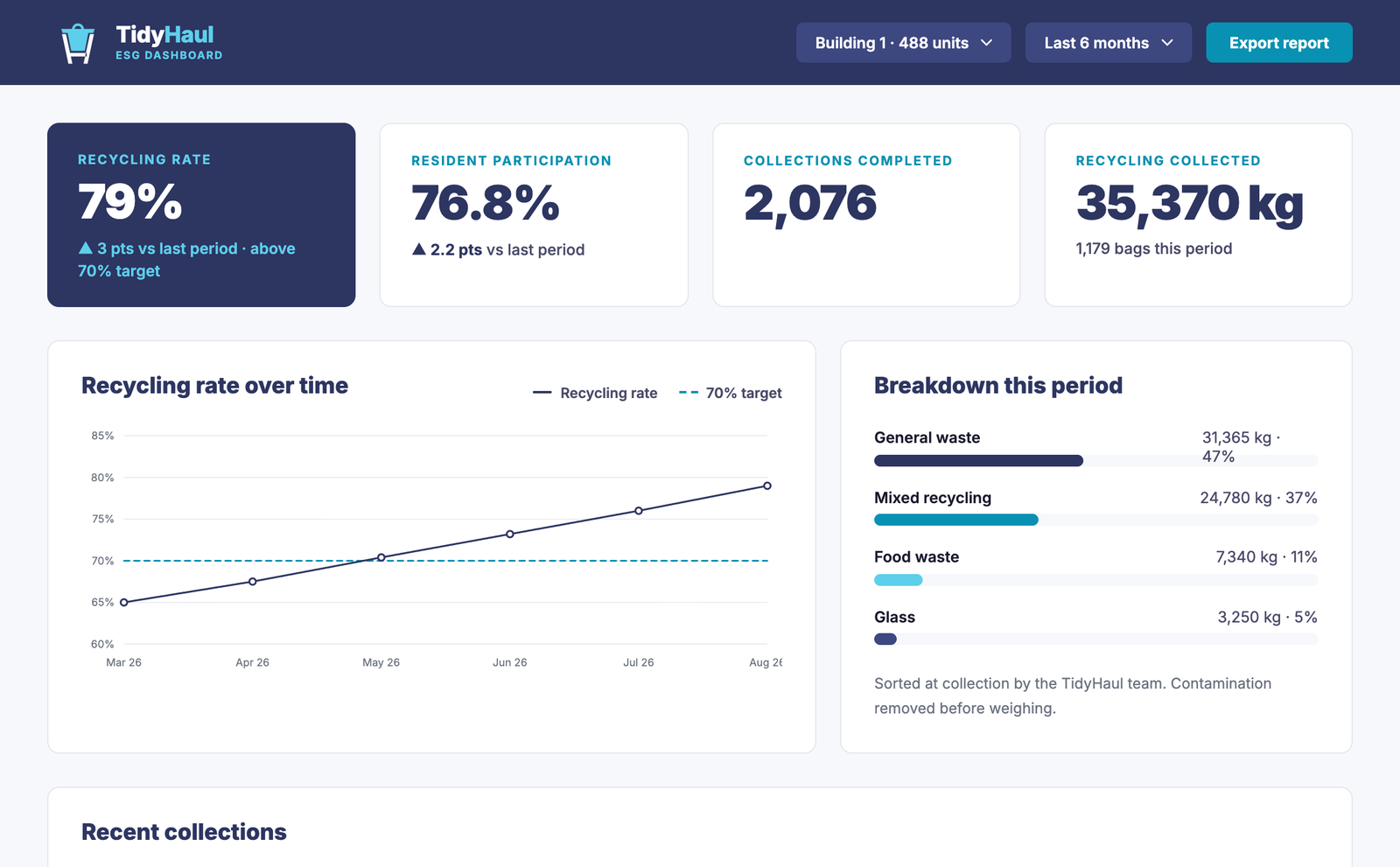
TidyHaul collects recycling, food waste and rubbish from each flat's door. You get three figures for every block: recycling rate, food waste participation and contamination.
Flats are where recycling stalls
Across London, communal properties capture about 7% of their food waste. Kerbside properties capture 29%. Source: West London Waste Authority, Communal Recycling Innovation Challenge documents.
Last reviewed November 2026
About 21% of communal waste is collected as recycling. Once contamination is taken out, it is nearer 13%. Source: West London Waste Authority, Communal Recycling Innovation Challenge documents.
Last reviewed November 2026
The money has arrived. The people have not.
Packaging EPR payments have reached councils, and they are about to be scored on recycling performance. Simpler Recycling brings food waste collection to flats.
Recycling teams are small, and in most councils nobody's job is flats. Engagement ends up reactive, because there is no one to send into the buildings.
Why the usual fixes fade
Leaflets and bin stickers are read once. Door-knocking works while the campaign runs and stops when it ends. More bins on their own do not change what residents put in them.
Each of these happens to a block a few times a year. Residents throw things away every day.
What TidyHaul does in a block
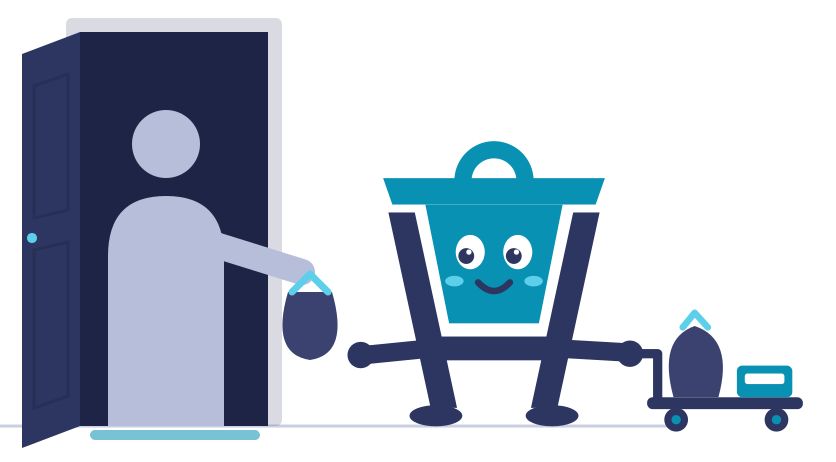
A small, fixed team of Haulers works in the building during set collection windows. Residents book on their phone, and a Hauler is at their door within 30 minutes.
The Hauler spot-checks the sorting with the resident on the doorstep. That is a recycling conversation whenever something is in the wrong bag, with the person who filled the bag.
TidyHaul follows your bins, your waste streams and your rules. Nothing about your collection contract changes.
What you can show your leader
Three figures for every block: the recycling rate, food waste participation and contamination.
Because every bag is weighed and logged, you can see those figures by flat, by floor and by waste stream. Today most councils have no data at that level for flats.
It takes about an hour a month of an officer's time.
Who is in your buildings
Every Hauler we hire is DBS-checked and has a day's training on the building and on your recycling rules before they start. Each block has its own small team, so residents get to know them.
Haulers are employed by TidyHaul. We recruit through Adaptive Grand Slam, Total Waste Recruitment and council back-to-work schemes.
Where it fits
TidyHaul is built for high-rise blocks. It is not the right answer for low-rise blocks or flats above shops, and TidyHaul will tell you so.
Questions we get asked
What if residents don't use it?
One US provider reports 88% of homes using its doorstep service every week (the provider's own figure, Texas, 2026).
Last reviewed November 2026
There is no UK figure yet. A pilot in one block gives you your own number before you commit to more.
What is the return?
The three figures above, measured per flat, and an engagement team in the block that you did not have to hire or manage. TidyHaul does not sell this on disposal savings. They are real, but they are small per flat.
Talk to Tom
Call 07305 783219 or email tom@tidyhaul.co.uk.